
Prairie Installation/Management in Ames, Iowa

Transform a portion of your property or business in Ames to Iowa’s native ecosystem.
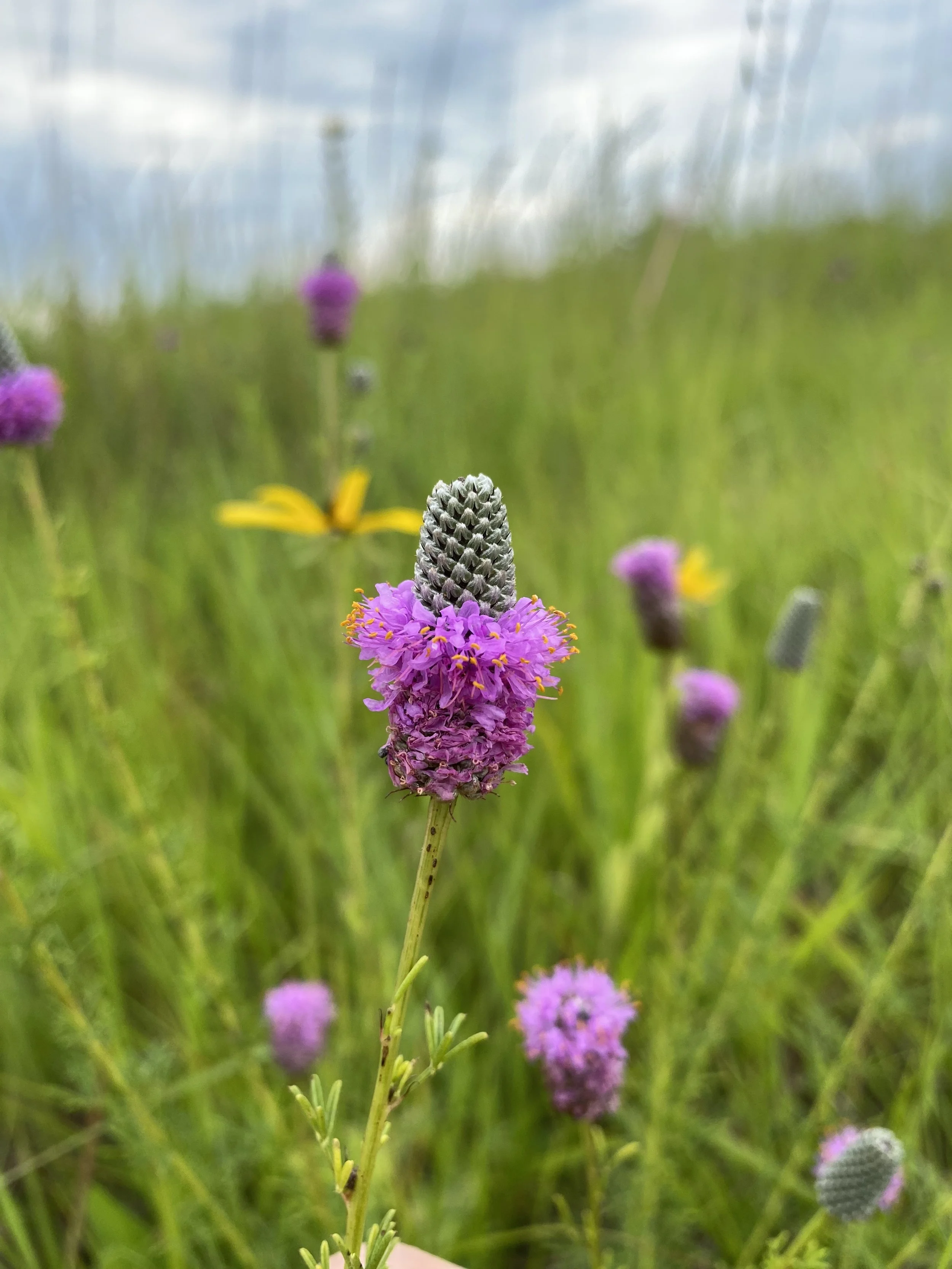
The Tallgrass prairie is an ecosystem home to over 500 species of plants, 150 bird species, 35 mammal species, 1,000+ species of insects — all relying on this ecosystem to thrive. With less than 1% of prairie remaining in Iowa, Tallgrass prairie is one of the most destructed and endangered ecosystems in the world.
First Step: Free Consultation
Transforming a portion of your Ames property to prairie will not only benefit pollinators like the native butterflies of Iowa, but promote soil health, drainage, and create wildlife shelter. The first consultation is free. In that consultation I will answer any questions you have, and begin to outline a quote that works with your property. We talk about things like erosion, time expectations, management methods, management frequency, mowing, and cost.
Go Cyclones :)

Second Step: Quote
After the free consultation, in no more than two weeks I will email you a quote for:
cost of grass removal (if this is a lawn to prairie project) and ground prep
cost for the prairie seeding/planting
cost of a two-year maintenance (usually this is a monthly cost)
Once you approve the quote, we can get started!

Third Step: Prairie Time!
Getting started is a science of finding the right window of weather for your planting/seeding, which will be detailed in your plan.
First on-the-ground step to get started will be prepping the soil and/or removing lawn, which is best to be started in early spring (in prep for Spring seeding) or summer (in prep for Fall seeding).
Frequently Asked Questions about Prairie Installation and Management Services
Is there a size requirement to turning a portion of lawn into prairie?
I would say 4’x4’ is about the smallest I’d do! If you have a smaller space, you could look into doing Native Plant Landscaping or a Pollinator Garden. When I am doing a prairie installation, I want enough space that at least 10-20 plants can grow within an area. It can absolutely be small, plus there are benefits to having a smaller space! A small prairie can be really easy to manage, low-cost to get going, and fun for the whole family to learn about the little bit of “wild” it introduces.
Is there a time of year that is better to get started?
Your first consult is free — which I recommend doing if you want to discuss, ask questions, and get an idea of what could work for your property. There is never a bad time to do that!
For beginning the install, spring and fall are the best times for seedings. If we are doing a planting-based installation rather than seed, we have more wiggle room for timeframes, especially if it is somewhere you would be able to water.
I always discuss timeframe questions when I send you the quote for your project!
How long does the process take?
Prairie establishment takes several years to get going. This is because many of the seeds have a process called Seed Stratification that requires them to sit dormant and cold for 12-13 weeks before they break dormancy. Some seeds native to the prairie like to sit dormant for even longer. Usually when we are doing a lawn to prairie conversion, I weave in some faster growing prairie species to the seed mix to help kick things off, while waiting for the slower growers to break dormancy and get going. Overall, I would say 3-5 years is a good estimate, depending on alot of factors, like weed threat. Areas of high weed threat are going to take longer to establish.
Will a prairie be lower maintenance than my lawn?
Long term: yes! And if you have someone like me do the management, then short term: yes, too!
That said:
Nurturing and fostering an endangered ecosystem isn’t simple or easy, and takes some gentle and patient stewarding to get there. In Iowa we have so many invasive weeds that do an incredible job of finding opportunity and seizing it.
Due to complex systems at play with agricultural run off, soil biology, and Iowa’s climate, sometimes the process of establishment can be hard to predict. Warm season grasses sometimes will kick off right away, and other times we have to wait a few years—and instead—its the forbs (wildflowers) that take off first. In theory, yes, installing prairie will be “less work” than a lawn, however, if you are a landowner trying to DIY a prairie, it likely will be much, much more work upfront. That is the honest truth!
This is why I offer management for all stages of the prairie, with cost never being one-size-fits-all, but specific to your project, size, weed threat, age of prairie, and challenges to your specific project.
Can I put prairie in an area where there is existing trees?
If it is a major shade tree, then no, that is not ideal to try to install prairie around and under it.
We would instead work with Iowa’s native woodland flora, as these plants can handle the shade. This would classify as a Woodland Restoration project!
Many landowners plant Colorado Blue Spruce and Cedars to create windbreaks, and later want to install prairie around them. While this is a great idea (yay for wanting prairie!) it is important to note that burning would no longer be a feasible management method due to the fact that burning could hurt your trees! Burning isn’t always a feasible option anyway, especially for residential prairie stewards.
If you have Cedars on your property, it is also important to note that Cedars love to grow invasively in prairie areas, so extra precaution of keeping Cedars clear of the prairie area would be advised.


About Paige
With ten years of experience in installing, managing, and restoring prairies across the state of Iowa, I am excited to help you explore this precious ecosystem.
I started Sown Ecological Solutions in 2021 to make restoration ecology services more accessible to private landowners and commercial businesses. I can’t wait to help you with your project!
Contact Form
sown@sownecologicalsolutions.com
